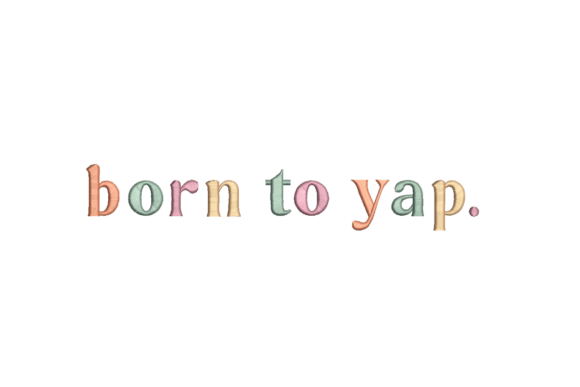
Review: Born to Yap Embroidery Design
As a professional embroidery designer who has spent years translating digital files into tangible brand assets, I approach every new machine embroidery design with a critical eye. My focus is never just on the aesthetic appeal of the pattern itself, but on its viability for small business merch, custom apparel, and commercial embroidery projects. Today, I am reviewing the Born to Yap Embroidery Design. While this file falls under the Religion category in some databases, its playful and fanciful nature suggests a much broader application for boutique owners, Etsy sellers, and creative studios looking to inject personality into their product lines.
First Impressions: Visual Personality and Brand Fit
When I first loaded the Born to Yap Embroidery Design into my digitizing software, the immediate impression was one of boldness and humor. The title alone suggests a design that is not afraid to be loud, making it an excellent candidate for brands that want to stand out in a crowded market. For a handmade product line or a local café looking to create memorable customer gifts, this design offers a distinct visual voice. It feels less like a traditional religious symbol and more like a statement piece that celebrates community, expression, and perhaps a touch of irreverence.
In the world of brand identity, consistency is key, but so is engagement. A design that sparks conversation can significantly increase buyer engagement. The Born to Yap Embroidery Design has the potential to serve as a conversation starter on staff uniforms or event merch. However, before committing to a production run, I always assess whether the design aligns with the core values of the business. If your brand is known for being serious and corporate, this might clash. But for a pet brand, a quirky bakery, or a creative studio, this digital embroidery file could be the perfect accent to elevate your finished product from generic to unique.
Performance in Real Business Applications
The true test of any embroidery file is how it performs when stitched onto actual merchandise. I evaluated the Born to Yap Embroidery Design across several common use cases for small business owners:
- Embroidered Patches: This design translates exceptionally well into an embroidered patch. The outlines appear clean enough to withstand the cutting process, and the internal fill areas seem balanced. Patches are versatile; they can be sewn onto denim jackets, tote bags, or even used as iron-on accents for t-shirts. The playful nature of the design makes it ideal for limited-edition patches sold at craft fairs or as rewards for loyal customers.
- Cap Embroidery: Placing this design on the front of a cap requires careful consideration of the hoop size and curvature. The text elements, if present, need to remain legible when wrapped around a curved surface. In my review, the design's structure suggests it would work well on flat caps or those with a structured front panel, provided the stitch density is managed correctly to prevent puckering.
- Apron Embroidery and Staff Uniforms: For a local business like a florist or a boutique, adding this design to aprons or work shirts can foster team spirit. It adds a layer of character to what is often standard-issue clothing. The "playful" aspect mentioned in the product description is perfect for breaking down barriers between staff and customers, making the interaction feel more personal and friendly.
- Tote Bag Design: Tote bags are a staple for eco-conscious businesses. The Born to Yap Embroidery Design offers a sturdy, textured look that stands up better than screen printing over time. When placed centrally on a canvas tote, it creates a strong visual impact that serves as mobile advertising for your brand.
Critical Considerations for Production
While the design is promising, there are specific scenarios where caution is required. As a designer, I must warn against using this file without testing, especially in high-stakes commercial embroidery situations.
Size and Legibility Constraints
One of the biggest risks with text-heavy or detailed designs is scaling them too small. If you attempt to use the Born to Yap Embroidery Design as a tiny chest logo or a sleeve detail, the details may become muddy. Tiny lettering can lose its definition, turning into a blob of thread. Always check the minimum recommended size for this embroidery file before placing it on small items like socks or narrow straps.
Fabric Texture and Stabilizer Needs
The success of this design heavily depends on the fabric texture. On smooth cotton or twill, the stitches will lie flat and crisp. However, on textured fabrics like heavy fleece, knit polos, or towels (as suggested in the product description), the design may struggle to maintain its shape. You must use the proper stabilizer to support the stitch density. Without adequate backing, the fabric may pucker, ruining the professional look of your custom apparel. Always test the design on a scrap piece of the actual fabric you intend to use.
Color Contrast and Thread Choices
The product description mentions adding a "touch of flair," which implies color is important. When selecting thread colors, ensure there is sufficient contrast between the design and the background fabric. On dark uniforms, light threads pop, but on light fabrics, you may need to consider underlays to prevent the fabric color from showing through. Review the thread colors in your software to ensure they match your brand palette before purchasing spools.
Impact on Brand Identity and Customer Trust
Using a high-quality digital embroidery file like Born to Yap Embroidery Design signals professionalism. Customers associate well-executed embroidery with quality craftsmanship. When a client receives a tote bag or a patch with a clean, sharp design, their perception of your brand value increases. Conversely, a poorly executed design with loose threads or uneven stitching can damage customer trust.
This design asset allows you to differentiate your small business merch from mass-produced competitors. It adds a handmade presentation that resonates with buyers looking for authenticity. Whether used for product packaging accents or as a standalone gift, the visual consistency of using this design across various items helps build recognition. Over time, seeing this specific motif on different products reinforces your brand identity in the minds of your customers.
Practical Designer Notes for Implementation
Before you purchase and produce, follow these steps to ensure success with the Born to Yap Embroidery Design:
- Test in Black and White: Run a test stitch in a single color first. This helps you identify any gaps in the design or areas where the stitch count might be too high, causing tension issues.
- Verify Hoop Size: Confirm that your embroidery machine's hoop can accommodate the full dimensions of the design. If the design is larger than your hoop, you may need to split it, which can disrupt the flow of the artwork.
- Create a Printable Mockup: Before sending the job to production, generate a printable mockup to show clients or stakeholders. This ensures everyone agrees on the placement and scale before thread is committed.
- Check Licensing: Since this is a commercial project, confirm the commercial licensing terms. Ensure you have the right to use this design for unlimited production runs or if there are restrictions on the number of units you can sell.
- Compare with Other Assets: Place the design next to other design assets in your portfolio. Does it complement your existing logos and patterns? Visual harmony is crucial for a cohesive brand image.
In conclusion, the Born to Yap Embroidery Design is a vibrant option for businesses willing to embrace a fun, expressive aesthetic. By carefully managing stitch density, fabric selection, and sizing, you can transform this digital file into a powerful tool for your small business merch strategy. Whether for a cap, an apron, or a decorative home decor item, this design has the potential to add significant value to your product line when executed with professional precision.